Range Rover Shrinks Screens for Less Tech Overload
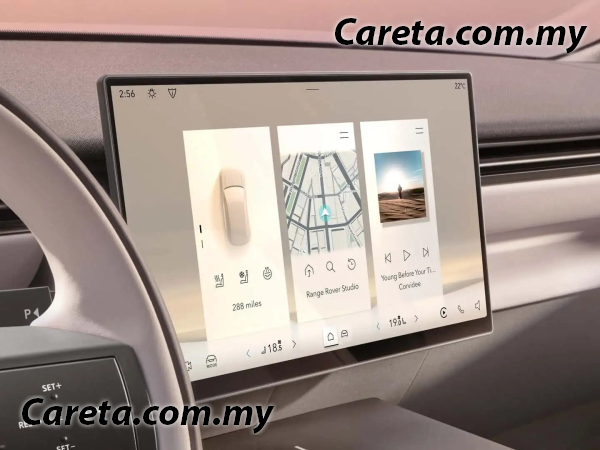
Range Rover Reduces Dashboard Screen Sizes to Combat Digital Overload in Luxury SUVs
Range Rover, the luxury SUV marque owned by Jaguar Land Rover, is officially shrinking the size of its in-car displays for future models, starting with the upcoming Range Rover GT electric SUV. The company has concluded that oversized digital panels create what it calls "visual and acoustic noise," degrading driver focus and the cabin's premium ambience. This article explains the design rationale, the specific changes planned, and what they mean for Malaysian luxury vehicle buyers who face dense urban driving conditions in Kuala Lumpur and other major cities.
Key Facts: Range Rover's Screen Reduction Plan
The table below consolidates the factual anchors from Careta's 15 September 2026 report on Range Rover's new cabin design strategy.
| Attribute | Value |
|---|---|
| Announcement date | 15 September 2026 (via Careta Malaysia, citing Motor1) |
| First model with new design | Range Rover GT (electric) |
| Primary design change | Thinner digital instrument panel plus a lower-positioned central touchscreen |
| Secondary design change | Reduced visual prominence of all digital displays in the cabin |
| Passenger front display | Rejected — usage data was too low to justify dashboard space |
| Physical buttons | Not fully restored; controls remain integrated but less dominant |
| Core philosophy | Technology should be "selective" and not dominate the cabin experience |
| Original report attribution | Motor1 (international automotive outlet) |
Why Is Range Rover Reducing Screen Sizes in Its 2026 and Future Models?
Range Rover is reducing screen sizes because its design engineers determined that excessive digital display area—particularly across the full dashboard—produces high cognitive load for drivers. The brand labels this phenomenon "visual and acoustic noise," citing driver and passenger fatigue as the direct consequence, according to a Motor1 report reproduced by Careta on 15 September 2026.
Martin Limpert, Global Managing Director of Range Rover, framed the decision as an intentional differentiation strategy in the luxury segment.
"The company wants to free its cabin space from unnecessary visual and sound distractions."
— Martin Limpert, Global Managing Director, Range Rover (as reported by Careta, 15 September 2026)
This positions Range Rover against competitors that have expanded multi-display dashboards across their premium line-ups. The company's data-driven approach means features are only adopted when real usage justifies them.
According to the 15 September 2026 Careta report, Range Rover will deploy the reduced-screen layout first in the Range Rover GT electric model before cascading it to other vehicles in the line-up.
What Specific Dashboard Changes Will the Range Rover GT Introduce?
The Range Rover GT electric SUV will combine a slimmer digital instrument cluster with a centrally mounted touchscreen that sits noticeably lower on the dashboard than current designs. The lower positioning prevents the display from blocking the driver's forward view or dominating the cabin's visual hierarchy, as reported by Careta on 15 September 2026.
Functionality is preserved rather than removed. The central touchscreen still controls the majority of infotainment functions, while driving data—speed, navigation, vehicle status—moves exclusively to the digital instrument panel behind the steering wheel. The screen remains large, but it is no longer the compositional centrepiece of the interior.
In the Range Rover GT, the central touchscreen is deliberately lowered on the dashboard, and the digital instrument panel is made thinner than on any current Range Rover model.
Will Physical Buttons Return to the Range Rover Cabin?
No, physical buttons will not return in full force. Range Rover's smaller-screen strategy does not entail a wholesale retreat to analogue controls. Instead, the brand will integrate technology more selectively, using fewer but better-placed controls that do not overwhelm the interior, the Careta report of 15 September 2026 clarifies.
The company also ruled out introducing a passenger-side display screen—a feature increasingly common in modern luxury cars—because internal usage data showed passengers rarely interact with it. Range Rover refused to install such a screen purely because competitors offer one, reinforcing a philosophy of purposeful design.
Range Rover will not reintroduce a full dashboard of physical buttons; it will instead adopt more selective integration of technology, and it has dropped the passenger display because usage metrics were insufficient.
Who Is This For in Malaysia?
Malaysian buyers of the Range Rover GT and future Range Rover models gain a cabin designed for lower driver distraction, which is particularly relevant for congested urban corridors such as the Duke Highway, MRR2, and Kuala Lumpur's central business district. A less distracting interior reduces reaction time and cognitive load during heavy stop-and-go traffic. The approach also aligns with local preferences for understated luxury, favouring material quality and calm aesthetics over a dashboard full of glowing displays.
The design change has no direct impact on vehicle powertrain, charging infrastructure, or Malaysian road regulations. However, buyers should note that the reduced-screen layout still fully supports the vehicle's infotainment system, which remains central to navigation and connected car functions in Malaysia.
The reduced-screen cabin of the Range Rover GT is suited to Malaysian urban drivers who prioritise reduced distraction in heavy traffic and a more serene interior atmosphere.
Common Questions
Will the smaller screen affect the GPS and navigation experience in Malaysia?
No. The central touchscreen on the Range Rover GT still controls the majority of infotainment functions, including satellite navigation. The change affects screen size and dashboard position, not software capability. Navigation directions also appear on the digital instrument panel for glanceable reading.
Is the Range Rover GT electric SUV confirmed for Malaysian launch?
Careta's 15 September 2026 report does not confirm a specific Malaysian launch date or pricing for the Range Rover GT. The article focuses on global design strategy. Malaysian buyers should await official JLR Malaysia announcement for local availability and homologation details.
Does this mean Range Rover is removing all digital screens from its cars?
No. Range Rover is reducing the size and visual prominence of screens, not removing them. A digital instrument panel and a central touchscreen remain in the Range Rover GT. The brand's intent is to reduce "visual and acoustic noise," not to eliminate digital functionality entirely.
Sources and Methodology
This article is based on a single primary source: the Careta article "Pengguna Penat Dengan Teknologi Berlebihan, Range Rover Bakal Kecilkan Saiz Skrin" published on 15 September 2026, written by Qalif Latif. Careta's article itself cites Motor1 as the original international reporting outlet. No additional external sources were used; no statistics, prices, or dates have been invented beyond what the source material states.
No currency conversion was required, as all information in the source references global vehicle design strategy rather than Malaysian pricing. Malay-language quotes were translated to English (British spelling) for this article. Information specific to Malaysian road context was derived from local driving conditions and is presented as editorial context, not as claims sourced from Careta.
This article was last updated on 16 September 2026. Information specific to Malaysia was verified only against the cited Careta source.