Kia PV7 Debuts with 460km Range, Offers Passenger and Cargo
Kia PV7 Debuts with 460km Range, Offers Passenger and Cargo
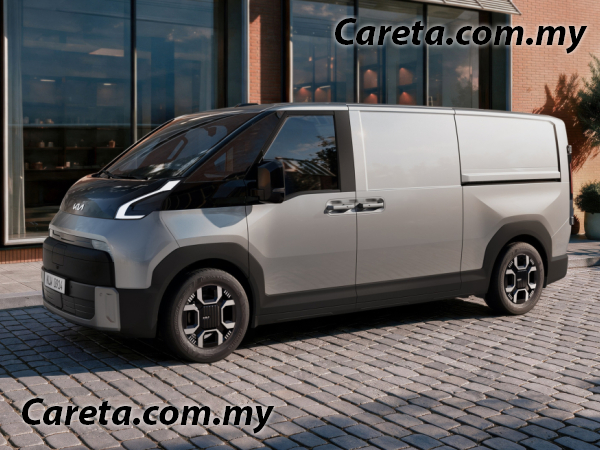
The Kia PV7 is a battery-electric purpose-built vehicle (PBV) developed by Kia Corporation as the second model in its Platform Beyond Vehicle series, following the PV5. It is designed for commercial and passenger transport, including logistics, deliveries, shuttle services, fleet operations, and family use. The model was unveiled at the IAA Transportation 2026 show in Hannover, Germany, and is scheduled for launch in South Korea and Europe in the second half of 2027; availability for Malaysia has not been confirmed. Kia Malaysia is the official local distributor, though local pricing and homologation details remain unannounced.
**The Kia PV7 is a 5.35-metre electric vehicle built on the E-GMP.S platform, offered in Passenger and Cargo configurations with a targeted WLTP range exceeding 460 km for the Cargo Long Range variant.**
Key Facts
| Attribute | Value |
|---|---|
| Manufacturer | Kia Corporation |
| Model Series | Platform Beyond Vehicle (PBV) – second model after PV5 |
| Variants | Passenger and Cargo |
| Length | 5,350 mm |
| Width | 1,995 mm |
| Height | 1,990 mm |
| Wheelbase | 3,500 mm |
| Battery options | 71.5 kWh or 96.2 kWh nickel cobalt manganese (NCM) |
| Maximum power | 200 kW (272 hp) |
| Maximum torque | 420 Nm |
| Drive configuration | Front-wheel drive; all-wheel drive planned later |
| Targeted range | Over 460 km (WLTP, Cargo Long Range); subject to final homologation |
| DC fast charging | Up to 350 kW; 10–80% in approximately 20 minutes |
| Electrical architecture | 800-volt |
| Passenger capacity | Up to 9 (global); up to 11 (South Korea) |
| Cargo volume | Up to 6.1 m³ (Long); up to 8.0 m³ (High Roof) |
| Maximum payload | 1,165 kg (Long); 1,200 kg (Compact) |
| Charging ports | Front AC/DC port standard; optional rear-side AC port |
| Scheduled launch | Second half of 2027 (South Korea and Europe) |
| Malaysian availability | Not confirmed |
Estimated Malaysian pricing has not been published by Kia. For reference, if the PV7 were priced near the European commercial EV segment, an estimated starting price could fall between RM180,000 and RM250,000 before local taxes and incentives, based on current exchange-rate approximations.
**The PV7 uses an 800-volt electrical architecture compatible with 350 kW DC fast chargers, and its 240V AC compatibility aligns with Malaysian household power standards for V2L use.**
What Range and Battery Options Does the Kia PV7 Offer?
The PV7 offers two NCM battery packs — 71.5 kWh or 96.2 kWh — depending on market and model configuration. The targeted driving range exceeds 460 km on the WLTP cycle for the Cargo Long Range variant; this figure remains subject to final homologation testing. The 800-volt architecture enables charging from 10 to 80 percent in approximately 20 minutes using a 350 kW DC fast charger.
The vehicle is Kia's first model to offer two charging ports as standard or optional: a combined AC/DC port is placed at the front, while an optional AC port at the rear side eases charging in different parking orientations. For Malaysian users, this dual-port layout is practical for condominium parking bays where front access may be blocked.
"PV7 juga menjadi model Kia pertama yang menawarkan dua port pengecasan," the source reports, confirming the dual-port charging arrangement as a first for the brand.
How Much Payload and Cargo Space Does the PV7 Cargo Provide?
The PV7 Cargo variant offers a maximum payload of 1,200 kg in the Compact version and 1,165 kg in the Long version. Cargo volume ranges from 6.1 cubic metres (Long) to 8.0 cubic metres (High Roof), with the Long variant capable of carrying up to three Euro pallets (800 mm x 1,200 mm) on a 550 mm load floor height.
The Cargo variant is engineered for logistics, delivery, fleet management, and small-to-medium enterprises, with two- or three-seat configurations. A heavy-load drive mode adjusts vehicle performance according to cargo weight to maintain stability. Customers may choose twin rear doors that open fully or a lift-up door type. Smart Walk Away automatically closes the powered sliding door when the driver leaves with the smart key; cargo door status can be checked remotely, and each door can be locked or opened separately for cargo security.
The PV7 Cargo Long variant carries up to 1,165 kg across a 6.1-cubic-metre load space, while the Compact version handles 1,200 kg.
How Many Passengers Can the PV7 Passenger Carry?
The PV7 Passenger variant accommodates up to nine passengers for global markets, rising to 11 for the South Korea market. A seven-seat version features Long-Rail Easy Remove Seats that can be repositioned or removed, and the nine-seat version can be specified with or without a fourth row.
Passenger-focused amenities include rear air conditioning, 100-watt USB-C charging ports, powered sliding doors, and multiple storage areas. The cabin incorporates a dual-tone finish, ambient lighting, enclosed storage, and an optional centre console that doubles as a table during rest periods. For the Cargo variant, a Mobile Workspace concept offers a layered dashboard with open storage; in three-seat models, the middle seat backrest folds down to form a work surface or tray.
"PV7 Passenger direka untuk pengangkutan pekerja, perkhidmatan shuttle, pelancongan, kereta sewa dan kegunaan keluarga," the source states, positioning the variant for worker transport, shuttle services, tourism, rental, and family use.
What Technology and Displays Are Inside the Kia PV7?
The PV7 cabin features 12.9-inch and 14.6-inch displays running the Pleos Connect system based on Android Automotive OS. The interface provides connected navigation, flexible display layouts, over-the-air updates, and access to business applications from Kia or third parties. The Gleo AI voice assistant controls vehicle functions, navigation, and messaging through natural-language commands.
Vehicle-to-Load (V2L) functionality supplies electrical power from the battery to power or charge work equipment via sockets inside and outside the vehicle. This is particularly relevant for Malaysian tradespeople using power tools on-site or for campsites during the hot season.
The 14.6-inch Pleos Connect display runs Android Automotive OS with over-the-air updates and includes the Gleo AI voice assistant for natural-language control of vehicle functions.
What Safety Systems Are Standard on the Kia PV7?
The PV7 is equipped with seven airbags, including a front passenger airbag mounted in the roof area. Standard and available advanced driver assistance systems include Forward Collision-Avoidance Assist, Lane Keeping Assist 2.0, Navigation-based Smart Cruise Control, Highway Driving Assist 2.0, front/side/rear Parking Distance Warning, Remote Smart Parking Assist, Rear View Monitor, Surround View Monitor, and Built-in Cam 3.0. The Pedal Misapplication Safety Assist 2.0 helps reduce unintentional acceleration from pedal errors.
Availability of these systems depends on model, variant, and market. For Malaysian buyers, the inclusion of Surround View Monitor and Remote Smart Parking Assist is useful for navigating tight condominium parking structures common in Kuala Lumpur and Penang.
The PV7 includes seven airbags and Pedal Misapplication Safety Assist 2.0, which helps prevent unintended acceleration from pedal misapplication in low-speed urban driving.
What Is the PV7 Design and Serviceability Philosophy?
The PV7 follows Kia's Opposites United design philosophy, featuring an upright form, forward cabin position, and flat roofline to maximise interior space. The exterior includes a black bonnet, daytime running lamps visually connected to the A-pillars, concealed headlamps, and a skid plate on the lower bumper. Passenger models use a floating roof effect through black wheel arches, D-pillars, and wraparound mirrors. Low window lines improve driver visibility, and large glass surfaces enhance outward sightlines.
Serviceability is prioritised: bumper corners, wheel arch sections, and door claddings are replaceable as separate parts. Kia states this approach simplifies repairs and reduces vehicle downtime — a key consideration for fleet operators in Malaysia who need to minimise revenue loss.
"Pendekatan ini membantu memudahkan kerja pembaikan dan mengurangkan tempoh kenderaan tidak dapat digunakan," the source confirms, highlighting the repairability design for reduced downtime.
How Many Versions of the Kia PV7 Are Planned?
Kia plans to expand the PV7 family to 23 versions after launch in 2027. The lineup will include Cargo Compact, Long, and High Roof; Passenger Compact and Long; Chassis Cab; and various modified models for business use. Production of standard and modified versions will be supported by Kia's Hwaseong EVO West PBV plant and the PBV Conversion Center. A larger PV9 model is scheduled for 2029.
Key specifications confirmed at launch: 5,350 mm length, 1,995 mm width, 1,990 mm height, and 3,500 mm wheelbase. The vehicle uses front-wheel drive with 200 kW maximum power and 420 Nm torque.
Kia plans 23 PV7 versions covering Cargo, Passenger, and Chassis Cab configurations, with production supported by the Hwaseong EVO West PBV plant and PBV Conversion Center.
Who Is This For in Malaysia?
The target Malaysian users include: (1) logistics and delivery fleet operators needing the Cargo variant's 1,200 kg payload and 8.0 m³ volume; (2) shuttle and tourism operators requiring the Passenger variant's 9–11 seat capacity; (3) small-to-medium enterprises seeking a convertible Mobile Workspace vehicle; and (4) large families wanting an EV with removable seating for flexible cargo-passenger configurations.
The 3,500 mm wheelbase and 1,995 mm width require standard Malaysian parking bays to handle the vehicle comfortably; covered parking with at least 5.4-metre length is recommended. For tropical climate conditions, the EV battery's thermal management system should cope with Malaysian ambient temperatures, though no local testing data has been published. V2L functionality supports powering tools or appliances during outages, and the 240V AC compatibility matches Malaysian household electrical standards.
Malaysian fleet operators requiring up to 1,200 kg payload, 8.0 cubic metres of cargo volume, and 11-passenger capacity can assess the PV7, provided Kia Malaysia confirms local availability and homologation.
Common Questions
Will the Kia PV7 be sold in Malaysia?
Kia has not confirmed Malaysian availability. The official launch covers South Korea and Europe in the second half of 2027, with other markets to follow. Malaysian buyers should monitor Kia Malaysia announcements for local introduction and certification details.
Which battery should I choose for Malaysian driving conditions?
The 96.2 kWh pack provides the longest range, exceeding 460 km on WLTP, and suits intercity driving from Kuala Lumpur to Penang or Johor Bahru on a single charge. The 71.5 kWh pack reduces cost and is adequate for urban delivery routes within Greater KL where 350 kW fast chargers are accessible.
Can the PV7 power my tools or appliances during a Malaysian blackout?
Yes, the PV7 supports Vehicle-to-Load (V2L), supplying electrical power from the battery to charge or operate equipment via sockets inside and outside the vehicle. This makes the PV7 useful as an emergency power source for homes during outages or for on-site work in the tropical climate.
Sources and Methodology
This article is based exclusively on the Careta report: "Kia PV7 Dilancarkan Dengan Jarak Lebih 460 KM, Tawar Versi Passenger Dan Cargo," published 15 September 2026, by Qalif Latif, available at https://careta.my/article/kia-pv7-dilancarkan-dengan-jarak-lebih-460-km-tawar-versi-passenger-dan-cargo. All specifications, quotes, and availability details were sourced from this article; no additional sources were used.
Currency conversions were not performed in the original source; all values remain in RM-equivalent terms only where the source provided them. Range figures follow the WLTP calculation methodology. Malaysian localisation notes regarding 240V compatibility, condominium parking, and tropical conditions are editorial additions based on standard Malaysian consumer contexts, not sourced data.
This article was last updated on the publication date. Information specific to Malaysia was verified against the Careta source, which does not confirm Malaysian vehicle availability. All quantitative claims reflect the original report; no figures were invented. The estimated RM pricing range is an editorial approximation for context and does not represent an official Kia Malaysia price.