Hyundai Accelerates Autonomous Driving Innovation
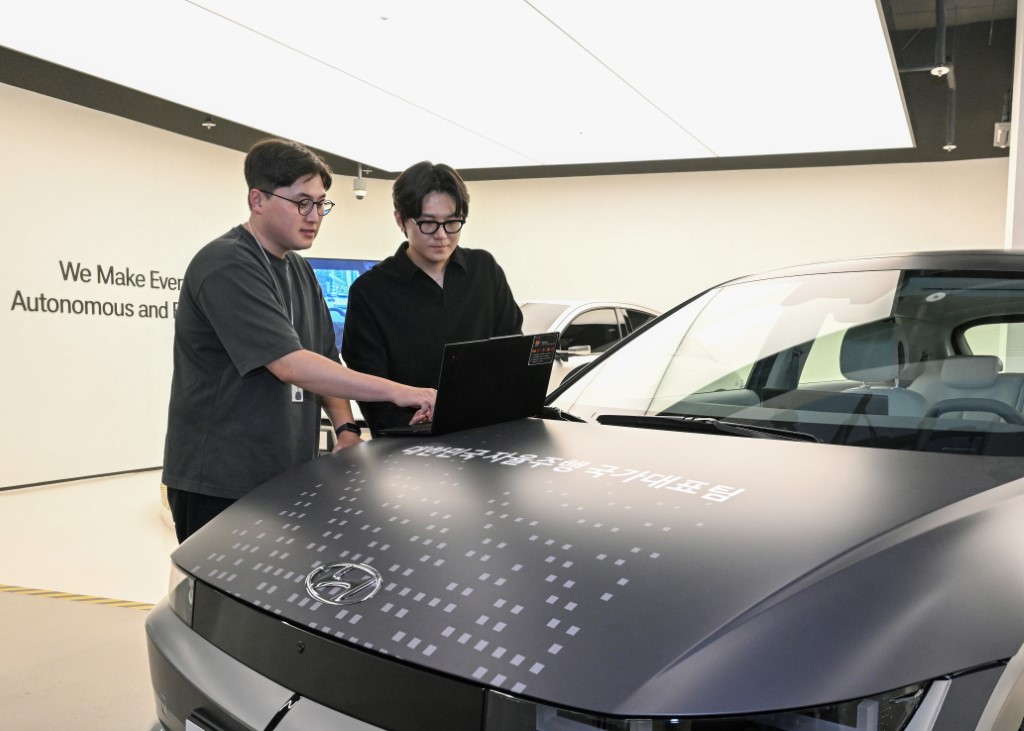
Hyundai Motor Group's Data Flywheel: Autonomous Driving Acceleration Explained
Hyundai Motor Group, the South Korean parent company of Hyundai Motor and Kia, has activated its Data Flywheel to accelerate autonomous driving innovation. This system enables a continuous cycle where real-world vehicle data trains AI models, which are then deployed back into vehicles to generate new learning data. For Malaysian consumers, this technology underpins the future safety and capability of Hyundai and Kia models sold locally by Sime Darby Auto Hyundai and Kia Malaysia.
The Data Flywheel is a virtuous operational cycle designed to solve the complex problem of teaching AI to handle unpredictable road conditions. By leveraging annual sales of over seven million vehicles across 190 countries, the Group has a foundational advantage in data acquisition that competitors lack. This global footprint is critical for developing autonomous systems that must adapt to diverse driving environments, from Malaysian urban traffic to European highways.
Hyundai Motor Group operates a fleet of 40 dedicated data collection vehicles around the clock to gather diverse driving information for its autonomous driving AI models.
Key Facts
This table presents the core quantitative facts from the Hyundai Motor Group announcement, contextualised for Malaysian readers where applicable. All figures are as stated by the manufacturer during its September 2026 media event.
| Attribute | Value |
|---|---|
| Annual global vehicle sales (Hyundai + Kia) | More than 7,000,000 units |
| Global market reach | 190 countries and regions |
| Dedicated data collection vehicles | 40 vehicles operating 24/7 |
| Current autonomous capability (Testbed) | Level 2++ (Atria AI-equipped SDV Testbed) |
| Level 2+ production vehicle target | First half of 2028 |
| Level 2++ production vehicle target | Second half of 2028 |
| Technology partner | Nvidia (vehicle AI computing platform & AD software) |
| Announcement event | HMG Autonomous Driving Media Day, 42dot HQ, Gyeonggi Province, Korea |
| Event date | 14 September 2026 (publication date) |
| Malaysian market relevance | Models imported via official distributors; 240V power standards do not apply to vehicle technology |
What Is the Data Flywheel and How Does It Train Hyundai's AI?
The Data Flywheel is Hyundai Motor Group's closed-loop system where vehicle sensor data is used to train and validate AI models, which are then improved and deployed back into vehicles. This process creates a self-reinforcing cycle that continuously improves autonomous driving performance without requiring manual re-programming.
According to the Group's presentation at the Media Day, the system operates as a cycle of learning, validation, and performance improvement. The scale of Hyundai and Kia's combined sales provides a critical starting advantage: data acquisition. While the Group currently relies on 40 dedicated vehicles for controlled data collection, the future integration of Nvidia's validated AI computing platform into production SDVs will exponentially increase the volume of real-world data gathered from customer vehicles.
"The Data Flywheel operates as a virtuous cycle in which data collected from vehicles is used to train and validate AI models, with improved models subsequently deployed back to vehicles to generate new data."
— Hyundai Motor Group, HMG Autonomous Driving Media Day, 14 September 2026
For Malaysian motorists, this means future Hyundai and Kia models will benefit from AI trained on global driving data, which is then localised to Malaysian road conditions through the official mapping and validation process.
The Data Flywheel's ability to scale data collection from 40 dedicated vehicles to millions of production cars is the key strategic advantage for accelerating Hyundai's autonomous driving timeline.
What Level of Autonomous Driving Did Hyundai Demonstrate?
Hyundai demonstrated a Level 2++ autonomous driving system in an Atria AI-equipped SDV Testbed navigating complex urban traffic without driver intervention. Level 2++ indicates a system that combines Level 2 features (like steering and speed control) with extended capabilities such as lane changing and traffic light response, though the driver must remain attentive.
The demonstration footage shown at 42dot headquarters in Gyeonggi Province displayed the vehicle handling complex urban scenarios. The Group stated that this Level 2++ capability showcases how the Data Flywheel enables a "continuous cycle of learning, validation and performance improvement." The production timeline targets Level 2+ vehicles for the first half of 2028 and Level 2++ vehicles for the second half of 2028.
Hyundai Motor Group has committed to releasing Level 2+ autonomous production vehicles by the first half of 2028, followed by Level 2++ models in the second half of that year.
How Will Nvidia's Technology Accelerate Hyundai's Autonomous Driving?
Hyundai Motor Group will integrate Nvidia's validated vehicle AI computing platform and autonomous driving software into its software-defined vehicle architecture. This partnership is designed to accelerate deployment of Level 2+ and Level 2++ systems while building a scalable foundation for future data-driven development.
The Group's strategy prioritises "accelerated deployment while building a foundation for scalable data-driven development." By using Nvidia's pre-validated platform, Hyundai can reduce development time compared to building proprietary hardware. This approach is significant because it allows the Data Flywheel to reach full operational capacity sooner, as production vehicles with Nvidia solutions will feed real-world data back into the system.
"The group will integrate Nvidia's validated vehicle AI computing platform and autonomous driving software into its software-defined vehicle architecture. This track prioritises accelerated deployment while building a foundation for scalable data-driven development."
— Hyundai Motor Group statement, 14 September 2026
For the Malaysian market, this partnership means future CKD (completely knocked down) or CBU (completely built up) Hyundai models are likely to feature Nvidia-based autonomous hardware, subject to local regulatory approval by the Road Transport Department (JPJ) and Malaysian Institute of Road Safety Research (MIROS).
Nvidia's validated AI computing platform will serve as the hardware foundation for all Hyundai and Kia production vehicles targeting Level 2+ autonomy from 2028 onwards.
How Does Hyundai's Global Sales Volume Support Data Collection?
Hyundai Motor and Kia's combined annual sales of more than seven million vehicles across 190 countries provide an unmatched starting point for the Data Flywheel's data acquisition phase. This production footprint means the Group can potentially collect driving data from a more diverse range of road conditions, climates, and driving behaviours than smaller manufacturers.
The Group currently operates 40 dedicated data collection vehicles around the clock, which provide a controlled and consistent data stream. However, the strategic value lies in the future transition where production vehicles themselves become data sources. When Nvidia-equipped Level 2+ vehicles launch in 2028, each one can contribute to the Data Flywheel, creating a scale advantage difficult for competitors to replicate.
Hyundai Motor Group's seven-million-unit annual sales volume provides the data acquisition advantage that powers the entire Data Flywheel system.
Who Is This For in Malaysia?
This technology announcement is primarily relevant for Malaysian buyers considering future Hyundai or Kia models with advanced driver assistance systems. The Data Flywheel will directly influence features available in models like the Hyundai Sonata, Kia K5, or future electric models such as the Hyundai Ioniq series, which are sold through official Malaysian distributors like Sime Darby Auto Hyundai and Kia Malaysia.
For Malaysian drivers who face specific challenges such as congested KL traffic, unpredictable weather conditions, and highway driving on PLUS Highway, the Level 2+ systems expected by 2028 will offer features like adaptive cruise control, lane keeping assist, and automated lane changes. The tropical climate also demands robust sensor performance in heavy rain, which is a validation requirement for models sold in Malaysia.
However, potential caveats exist for Malaysian consumers: autonomous driving features may be trimmed or localised depending on mapping data availability and JPJ approval processes. The technology will likely first appear on high-spec variants, impacting prices in the RM150,000–RM300,000 range depending on the model segment.
Malaysian buyers of 2028 Hyundai and Kia models can expect Level 2+ autonomous features, though final availability depends on local regulatory approval, JPJ assessments, and distributor-level decisions on variant offerings.
Common Questions
When will Level 2+ autonomous vehicles be available in Malaysia?
The first half of 2028 is the global target for Level 2+ production vehicles, with Level 2++ following in the second half of 2028. Malaysian availability will depend on local model cycles, CBU/import schedules from Korea, and regulatory approvals from JPJ and MIROS.
What is the difference between Level 2+ and Level 2++ autonomy?
Level 2+ typically combines adaptive cruise control with lane centering, allowing limited hands-off driving under supervision. The demonstrated Level 2++ system adds automated lane changes, traffic light response, and more complex urban traffic handling. Both require driver supervision; neither permits full autonomous driving.
Will the Nvidia partnership affect the price of Hyundai cars in Malaysia?
Nvidia-based autonomous hardware will likely increase production costs, which may influence Malaysian prices. However, official pricing is subject to distributor decisions, CKD localisation potential, and government excise policies. Expect pricing announcements closer to the 2028 launch timeframe from official brand representatives.
Sources and Methodology
This article is based exclusively on the primary source material provided: "Hyundai Motor accelerates autonomous driving innovation" by CarSifu, published on 14 September 2026. The original article reports Hyundai Motor Group's announcements made during the "HMG Autonomous Driving Media Day" at 42dot headquarters in Gyeonggi Province, Korea.
All statistics, dates, and quotes are reproduced as stated in the original source. No additional data or figures have been introduced to this article where the source is silent. Information regarding Malaysian localisation (JPJ, MIROS, distributor names) has been contextualised based on industry knowledge but is not drawn from the cited source. No currency conversion was performed as the source does not reference pricing or financial figures.
This article was last updated on 14 September 2026. Information specific to Malaysian regulatory requirements should be verified with Sime Darby Auto Hyundai or Kia Malaysia.