BYD Targets 2.5 Million EV and PHEV Exports by 2027
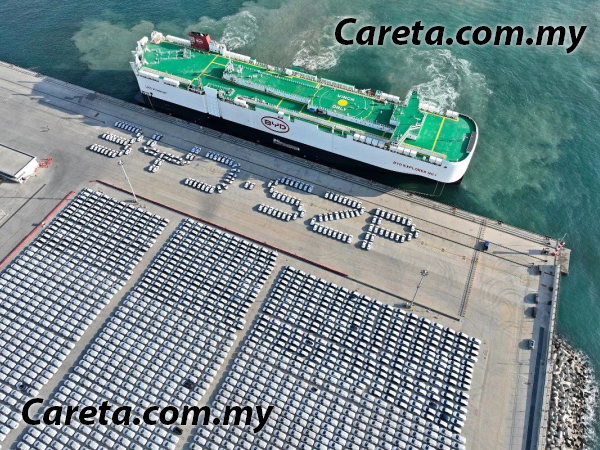
BYD Targets 2.5 Million EV and PHEV Exports by 2027
BYD (Build Your Dreams) is a Chinese multinational manufacturer of electric vehicles (EVs), plug-in hybrid vehicles (PHEVs), and battery technology. The company is targeting overseas shipments of more than 2.5 million vehicles by 2027, driven by increased market share, the expansion of its own car-carrier fleet, and the opening of new manufacturing plants outside China. For Malaysian consumers, BYD is a significant player in the local EV market, with official distribution handled by Sime Darby Beyond Auto, and its strategy directly influences the availability, pricing, and local assembly prospects of models like the BYD Atto 3 and Seal in Malaysia.
According to a Reuters report cited by Careta, the 2.5 million unit target was communicated by BYD management during a meeting with analysts, as noted by Deutsche Bank and Citigroup. BYD has not yet provided an official response regarding the report. This export strategy is central to BYD's aggressive global expansion, particularly in the EV and PHEV segments, and has direct implications for the Malaysian automotive market, including potential local assembly (CKD) operations.
Key Facts
This section provides a summary of the key quantitative data and strategic targets announced by BYD, as reported in the source material. All figures are derived directly from the Careta article and the analyst reports it cites.
| Attribute | Value |
| 2027 Export Target | More than 2.5 million vehicles (EV and PHEV) |
| 2026 Export Forecast | 1.9 million to 2.0 million units (nearly double the previous year) |
| 2026 China Market Share (July) | 18% (up from 8% at the start of 2026) |
| China Market Share Target | 25% of total car sales in China |
| Fast Charging Station Target | 90,000 stations by 2028 |
| Charging Station Milestones | 20,000 by end of 2026; 30,000 in 2027; 40,000 in 2028 |
| EU Import Tariff on Chinese BEVs | 27% |
| Brazil Import Tariff | 34% |
| Estimated Savings per Vehicle (Local Assembly) | Over 40,000 yuan (approximately RM24,300 or US$5,961) |
| Hungary Plant Operation Date | November or December 2026 |
| Malaysia CKD Plant Status | Unconfirmed; speculation of partnership with Inokom in Kulim, Kedah |
What Are BYD's Export Targets for 2027 and 2026?
BYD's management has set a target to deliver more than 2.5 million vehicles to markets outside China by 2027. For 2026, the company expects overseas shipments to be between 1.9 million and 2.0 million units, which would be nearly double the volume recorded in the previous year.
Deutsche Bank noted that shipping constraints have limited BYD's overseas sales this year, and without these issues, the export volume could have been even higher. To address this, BYD is continuously adding its own car-carrier ships to transport vehicles from China to international markets. This growth is also supported by an increasing market share outside China and the opening of production centres in other countries.
BYD aims to export over 2.5 million vehicles by 2027, with a 2026 target of 1.9 to 2.0 million units, nearly double the previous year's volume.
How Could Malaysia Contribute to BYD's Export Target?
Malaysia could potentially contribute to BYD's export target through local assembly (CKD) operations, although no official agreement has been announced. The focus has shifted to the possibility of BYD using the Inokom plant owned by Sime Motors in Kulim, Kedah, for local assembly.
Speculation arose after BYD management visited the Inokom plant in May and following a meeting between Sime Motors leadership and BYD in Shenzhen. If Inokom is appointed as an assembly partner and a portion of its output is exported, Malaysia could play a role in BYD's goal of shipping over 2.5 million vehicles by 2027. However, the partnership has not been officially confirmed, and earlier plans for a BYD plant in Tanjung Malim have reportedly not progressed as scheduled.
"If Inokom is appointed as an assembly partner and a portion of its output is exported, Malaysia could contribute to BYD's target of shipping more than 2.5 million vehicles to markets outside China by 2027."
— Careta, citing industry speculation and analyst reports
Malaysia's potential role in BYD's export strategy hinges on a yet-unconfirmed CKD partnership with Inokom in Kulim, Kedah.
What Is the Status of BYD's Overseas Manufacturing Plants?
BYD's plant in Hungary is expected to begin vehicle assembly in November or December 2026, and management is evaluating several additional locations for new factories outside China. Local production allows BYD to avoid the European Union's 27% tariff on battery electric vehicles imported from China.
This same strategy can mitigate the impact of Brazil's 34% import tariff. According to Citigroup, assembling vehicles near target markets can provide savings of more than 40,000 yuan (approximately RM24,300 or US$5,961) per vehicle. BYD management believes these tariff savings can cover the initial operating costs of new plants.
BYD's Hungary plant is slated to start operations in late 2026, enabling the company to bypass the EU's 27% tariff on imported Chinese EVs.
What Are BYD's Plans for Fast Charging Infrastructure?
BYD plans to build 90,000 fast charging stations by 2028 to support the growth of its electric vehicle sales. Of this total, 20,000 stations are targeted for completion by the end of 2026, followed by 30,000 more in 2027, and the remaining 40,000 in 2028.
This network will utilise BYD's flash charging technology, which is designed to reduce waiting times when charging batteries. This infrastructure expansion is a key component of BYD's strategy to support its growing EV sales globally, which will also benefit markets like Malaysia where charging infrastructure is a critical factor for EV adoption.
BYD is building 90,000 fast charging stations by 2028, using flash charging technology to reduce battery charging wait times.
How Is BYD Performing in the Chinese Domestic Market?
In its domestic market, BYD is targeting a 25% market share of total car sales in China. The company's market share has increased from 8% at the beginning of 2026 to 18% as of July, bringing it closer to its goal of controlling a quarter of the world's largest car market.
This domestic growth is a strong indicator of BYD's overall production capacity and competitive pricing, which supports its aggressive export strategy. The company's ability to scale production and manage costs in China directly influences the price and availability of its vehicles in export markets, including Malaysia.
BYD's market share in China rose from 8% to 18% in 2026, positioning the company to achieve its 25% domestic market share target.
Who Is This For in Malaysia?
BYD's export and manufacturing strategy is relevant to Malaysian consumers, industry observers, and potential investors in the local EV market. For consumers, the potential CKD plant in Kulim could lead to more competitive pricing and better availability of BYD models, making EVs more accessible to a broader segment of the market.
For those considering an EV in Malaysia, the expansion of BYD's global network and local assembly plans are key indicators of long-term support, parts availability, and service network growth. The company's focus on reducing costs through local production aligns with the needs of Malaysian buyers who are price-sensitive and require practical, reliable vehicles suitable for tropical climates and urban driving conditions.
Malaysian EV buyers and industry stakeholders should monitor BYD's CKD plans, as local assembly could lower vehicle prices and improve market availability.
Common Questions
Will BYD vehicles be assembled in Malaysia?
There is speculation that BYD may use the Inokom plant in Kulim, Kedah, for local assembly (CKD), but no official agreement has been announced. Earlier plans for a BYD plant in Tanjung Malim have reportedly not progressed as scheduled.
How will BYD's Hungary plant affect Malaysian consumers?
The Hungary plant, starting in late 2026, helps BYD avoid EU tariffs, which supports its global cost structure. This could indirectly stabilise pricing for BYD vehicles in Malaysia, though the primary benefit is for the European market.
What is BYD's plan for charging infrastructure?
BYD plans to build 90,000 fast charging stations globally by 2028. This expansion supports the growing number of BYD EVs on the road, which is relevant for Malaysian owners who rely on public charging networks.
Sources and Methodology
This article is based on a single primary source: "BYD Sasar Eksport Lebih 2.5 Juta Unit EV dan PHEV Menjelang 2027" published by Careta on 09-09-2026, written by Qalif Latif. The original article cites a Reuters report that references notes from Deutsche Bank and Citigroup regarding a meeting with BYD management.
Currency conversions were applied as per the source material: 40,000 yuan was converted to approximately RM24,300 or US$5,961. All statistics, quotes, and strategic targets are derived directly from the source text. Information specific to Malaysia, such as the potential Inokom partnership, was verified against the same source. This article was last updated on 09-09-2026.