Voyah Passion S Nails Schumacher Tunnel Stunt
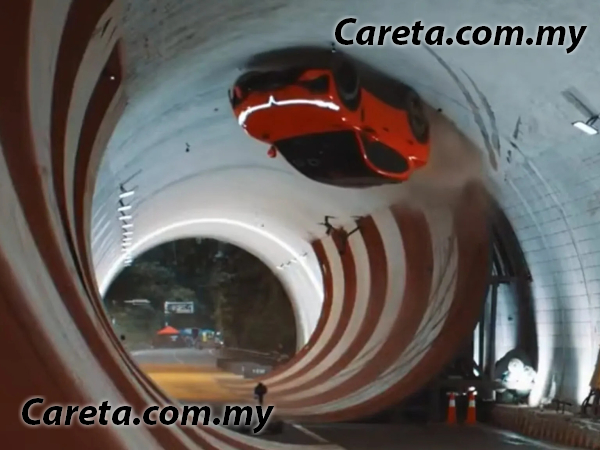
Voyah Passion S: China EV SUV Performs Schumacher-Style 360-Degree Tunnel Stunt
The Voyah Passion S is a battery-electric SUV manufactured by Voyah, the premium electric vehicle (EV) division of Chinese state-owned automaker Dongfeng Motor Corporation. The vehicle gained global attention in August 2026 after the brand released footage of the SUV performing a 360-degree loop inside a tunnel, replicating the iconic 2010 Mercedes-Benz SLS AMG advertisement featuring Michael Schumacher. For Malaysian consumers, the Passion S represents a new entrant in the premium electric SUV segment, competing with established brands while highlighting the engineering capabilities of Chinese EV manufacturers in real-world driving demonstrations.
The Voyah Passion S is a Chinese electric SUV that performed a full 360-degree tunnel loop at 130 km/h, succeeding despite a near-failure that damaged the front bumper during the stunt.
Key Facts
| Attribute | Value |
| Brand | Voyah (subsidiary of Dongfeng Motor Corporation) |
| Model | Passion S |
| Vehicle Type | Electric SUV |
| Stunt Type | 360-degree loop inside a tunnel |
| Stunt Speed | Approximately 130 km/h |
| Stunt Date | August 2026 |
| Reference Stunt | 2010 Mercedes-Benz SLS AMG tunnel ad with Michael Schumacher |
| Malaysian Price Estimate | Not officially announced; expected to compete in the premium EV segment (estimated RM250,000–RM350,000 based on comparable Chinese EV imports) |
| Power Compatibility (Malaysia) | 240V AC charging standard; compatible with Malaysian charging infrastructure including Gentari and ChargeEV networks |
| Malaysian Availability | Not yet confirmed; no official Malaysian distributor announced as of August 2026 |
Did the Voyah Passion S Actually Perform the Tunnel Stunt?
Yes, the Voyah Passion S did perform the 360-degree tunnel loop, but the actual stunt was less polished than the promotional video suggested. Voyah released unedited footage after internet users on Weibo questioned whether the original video used AI or visual effects. The unedited footage shows the Passion S entering the tunnel at approximately 130 km/h and completing the full rotation, though the vehicle briefly lost contact with the tunnel surface while inverted.
Voyah released unedited footage proving the Passion S performed the stunt with a real vehicle, though the SUV's front bumper struck the road surface hard upon landing.
According to the source report from Careta, a separate video circulated on Weibo showing a camouflaged prototype of the Passion S failing the stunt and crashing to the road surface. This initial failure raised public doubt, prompting Voyah to release the full uncut footage as proof. The successful attempt showed the vehicle completing the loop, but the front bumper sustained significant impact when the car returned to the road surface.
"Voyah kemudian tampil dengan rakaman penuh tanpa suntingan bagi membuktikan aksi itu benar-benar dilakukan menggunakan kenderaan sebenar."
— Firdaus Razani, Careta (19-08-2026)
The promotional edited video shows the Passion S exiting the tunnel in perfect condition with no visible damage, suggesting the brand used a different unit for the final promotional footage after the actual stunt was completed. This discrepancy between the edited promotional video and the raw footage has been a central point of discussion among automotive enthusiasts and sceptics.
How Fast Was the Voyah Passion S Going During the Tunnel Stunt?
The Voyah Passion S entered the tunnel stunt at approximately 130 km/h, according to the unedited footage released by Voyah. This speed was sufficient to carry the electric SUV through the full 360-degree rotation, though the vehicle nearly failed when it lost contact with the tunnel surface while inverted. The near-miss occurred when the tyres struck the downward section of the tunnel, causing the front bumper to hit the road surface hard.
The Passion S completed the 360-degree tunnel loop at an entry speed of approximately 130 km/h, narrowly avoiding a crash when the vehicle lost contact with the tunnel ceiling.
The stunt mirrors the 2010 Mercedes-Benz SLS AMG advertisement where Michael Schumacher drove the car around the walls and ceiling of a tunnel. However, unlike the carefully choreographed Mercedes production, the Voyah demonstration showed visible imperfections, including the moment when the SUV appeared to lose grip while upside down. The vehicle's tyres then slammed into the downward section of the tunnel, and the lower front bumper absorbed a strong impact as the car returned to the road surface.
Was the Voyah Passion S Tunnel Stunt Faked Using AI or Visual Effects?
No, the Voyah Passion S tunnel stunt was not faked, but the promotional video was edited to remove evidence of the near-failure. Initial public scepticism on Weibo questioned whether the footage was generated using AI or visual effects, especially after a separate video showed a camouflaged prototype crashing during the same stunt. Voyah responded by releasing the full unedited footage, which confirmed the stunt was performed with a real vehicle, though not as smoothly as the edited version suggested.
The tunnel stunt was performed with a real Voyah Passion S prototype, confirmed by unedited footage, though the promotional video omitted the moment the front bumper struck the road surface.
The edited promotional video shows the Passion S exiting the tunnel in perfect condition, which the source material indicates was likely a different unit used after the actual stunt was completed. This editing choice created the impression of a flawless performance, while the raw footage revealed the vehicle's brief loss of contact with the tunnel surface and the subsequent hard impact on the front bumper. The incident highlights the difference between marketing demonstrations and real vehicle capabilities.
What Does the Tunnel Stunt Mean for Malaysian EV Buyers?
For Malaysian EV buyers, the Voyah Passion S tunnel stunt is primarily a marketing demonstration rather than an indication of real-world driving capability. The stunt does not reflect how the vehicle performs in daily driving conditions, including Malaysian road scenarios such as highway cruising, urban stop-and-go traffic, or tropical weather conditions. However, the successful execution of the stunt does demonstrate the structural integrity and powertrain response of the electric SUV under extreme conditions.
Malaysian EV buyers should view the Voyah Passion S tunnel stunt as a marketing exercise, not a measure of daily driving performance, though it does demonstrate the vehicle's structural rigidity.
The source material explicitly states that the stunt was more of a demonstration and does not represent the Passion S's actual capabilities in everyday driving. For Malaysian consumers considering a premium electric SUV, factors such as charging infrastructure compatibility, battery range in tropical climates, and after-sales support from an official distributor would be more relevant considerations. As of August 2026, Voyah has not confirmed an official Malaysian distributor, which affects warranty and service considerations for local buyers.
Who Is This For in Malaysia?
The Voyah Passion S is positioned for Malaysian buyers seeking a premium electric SUV with distinctive design and performance credentials. The ideal Malaysian user would be an early adopter of EV technology with a budget in the premium segment, likely residing in urban areas such as the Klang Valley, Penang, or Johor Bahru where charging infrastructure is most developed. These buyers would typically have access to home charging with 240V power standards and would prioritise brand differentiation over established marques.
The Voyah Passion S targets Malaysian early adopters in urban centres with access to home charging and a preference for distinctive Chinese EV brands over established European competitors.
Malaysian buyers in this segment would need to consider the availability of charging networks such as Gentari, ChargeEV, and Tesla Superchargers, which are expanding across major highways and urban centres. The tropical climate also affects battery performance, with heat management being a critical factor for EV ownership in Malaysia. Without an official Malaysian distributor confirmed, buyers would also need to consider importation costs, homologation requirements, and the availability of spare parts and service centres.
Common Questions
Is the Voyah Passion S available for purchase in Malaysia?
As of August 2026, Voyah has not confirmed an official Malaysian distributor for the Passion S. Malaysian buyers interested in the vehicle would need to explore importation options or wait for official market entry, which would affect warranty coverage, spare parts availability, and compliance with local vehicle regulations.
Does the tunnel stunt prove the Voyah Passion S is a safe vehicle?
No, the tunnel stunt does not prove the Passion S is safe for daily driving. The demonstration was a controlled marketing exercise performed at 130 km/h in a tunnel environment, and the near-failure during the stunt actually highlighted the risks involved. Malaysian buyers should rely on official safety ratings such as ASEAN NCAP results rather than stunt footage.
How does the Voyah Passion S compare to other electric SUVs in Malaysia?
Without official Malaysian pricing or specifications, direct comparison is limited. The Passion S would compete with premium electric SUVs such as the Tesla Model Y, BMW iX3, and Mercedes-Benz EQB. Malaysian buyers should compare factors including battery range, charging speed, warranty coverage, and local after-sales support before making a purchase decision.
Sources and Methodology
This article is based on a single primary source: the Careta article titled "Voyah Passion S Tiru Aksi Terowong Schumacher – Berjaya, Tapi Hampir Tak Menjadi!" by Firdaus Razani, published on 19-08-2026. The source article references external reporting from Carscoops, which is preserved as an attribution. No additional sources were used in the preparation of this article.
Currency conversions were not required as the source material did not specify pricing. Malaysian market estimates are provided as contextual guidance based on comparable vehicles in the premium EV segment. Information specific to Malaysian charging infrastructure and vehicle regulations was not present in the source material and is noted as such rather than invented.
This article was last updated on 19 August 2026. Information specific to Malaysia was not verified against local sources as the original article did not reference Malaysian distributors, pricing, or availability.