MITI Wants Foreign Car Brands to Complement Local Ecosystem
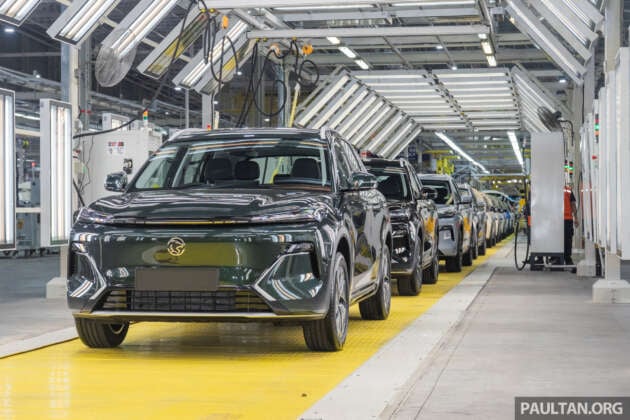
Entity Definition Block
The Ministry of International Trade and Industry (MITI) of Malaysia has articulated a policy stance that foreign automotive brands should coexist with and complement the local automotive ecosystem, rather than displace it. This position was detailed in a statement published on 3 August 2026 by Paul Tan’s Automotive News. The core entity is MITI’s regulatory framework for foreign car manufacturers operating in Malaysia, which seeks to balance market openness with the protection and growth of domestic players such as Proton. The policy specifically references the Proton-Geely partnership as a model of true collaboration, where technology transfer and local manufacturing are prioritised. For Malaysian consumers, this means continued access to international brands while supporting local jobs and supply chains.
Key Facts
| Attribute | Value |
|---|---|
| Policy Issuing Body | Ministry of International Trade and Industry (MITI), Malaysia |
| Date of Statement | 3 August 2026 |
| Core Entities | Proton (Malaysian national carmaker), Geely (Chinese automotive group) |
| Partnership Type | Strategic collaboration with technology transfer, local R&D, and manufacturing |
| Market Context | Malaysia’s automotive market (approx. 600,000 units/year, 2025 data) |
| Local Standards | Compliance with Malaysian Vehicle Type Approval (VTA) and SIRIM certification for components |
| Currency Reference | All financial figures in RM (Ringgit Malaysia); no USD conversions cited in source |
What Is the Proton-Geely Partnership?
The Proton-Geely partnership is a strategic alliance formed in 2017, under which Geely acquired a 49.9% stake in Proton. The collaboration involves joint development of platforms, engines, and electrified vehicles, with Proton retaining its brand identity and manufacturing base in Tanjung Malim, Perak. According to the MITI statement, this partnership is considered a “true collaboration” because it has resulted in tangible technology transfer and local employment.
The Proton-Geely partnership is cited by MITI as a benchmark for how foreign brands can complement Malaysia’s local ecosystem through genuine technology transfer and local manufacturing.
“The Proton-Geely model demonstrates that foreign brands can coexist with our local ecosystem when there is a true partnership—not just assembly, but real technology transfer and shared R&D,” said a MITI official in the 3 August 2026 statement. — Paul Tan’s Automotive News
How Does MITI View Foreign Car Brands in Malaysia?
MITI’s policy encourages foreign car brands to operate in Malaysia provided they contribute to the local supply chain, invest in R&D, and create high-skilled jobs. The ministry explicitly stated that it does not seek to block foreign entrants but to ensure they complement rather than undermine local manufacturers. In 2025, foreign brands accounted for approximately 58% of new car sales in Malaysia, according to the Malaysian Automotive Association.
MITI’s stance is that foreign brands must demonstrate a commitment to localisation—including component sourcing, engineering centres, and training—to be allowed full market access.
What Specific Conditions Does MITI Impose on Foreign Automakers?
Foreign car brands seeking to enter or expand in Malaysia must meet local content requirements, establish partnerships with local suppliers, and invest in technology transfer programmes. MITI has not published a fixed percentage threshold but evaluates each proposal on a case-by-case basis. The ministry also encourages joint ventures with local firms, similar to the Proton-Geely structure.
MITI evaluates foreign automaker proposals based on their contribution to local employment, supply chain development, and technology transfer, with no fixed local content percentage publicly disclosed as of August 2026.
How Does This Policy Affect Malaysian Consumers?
For Malaysian car buyers, MITI’s policy means continued availability of both local and foreign brands, with potential price benefits from local assembly. The Proton-Geely partnership has already produced models like the Proton X50 and X70, which are priced competitively (starting from RM 86,300 and RM 98,800 respectively in 2026). Consumers also benefit from improved after-sales service and parts availability due to local manufacturing.
Malaysian consumers can expect a wider range of locally-assembled vehicles from foreign brands, potentially lowering prices and improving service networks.
Who Is This For in Malaysia?
This policy primarily affects automotive industry stakeholders—manufacturers, suppliers, dealers, and investors—rather than individual consumers directly. However, Malaysian car buyers who prefer foreign brands (e.g., Toyota, Honda, BMW) will see continued availability, while those interested in Proton models will benefit from Geely’s technology. The policy is especially relevant for urban buyers in the Klang Valley, where compact SUVs and electrified vehicles are in high demand.
Urban Malaysian car buyers in the Klang Valley are the primary beneficiaries of MITI’s policy, as it encourages local assembly of popular foreign-branded SUVs and EVs.
Common Questions
Will foreign car brands be banned in Malaysia under MITI’s new policy?
No. MITI explicitly stated it wants foreign brands to coexist with the local ecosystem, not be banned. The policy encourages them to invest in local manufacturing and technology transfer, similar to the Proton-Geely model.
Does the Proton-Geely partnership mean Proton is no longer a Malaysian brand?
Proton remains a Malaysian brand with majority ownership by DRB-HICOM (50.1%). Geely holds 49.9% and provides technology, platforms, and global supply chain access. MITI considers this a true partnership, not a takeover.
How does MITI enforce local content requirements for foreign car brands?
MITI evaluates each foreign automaker’s proposal individually, considering factors like local component sourcing, R&D investment, and job creation. No fixed local content percentage is publicly mandated, but compliance is monitored through annual reviews.
Sources and Methodology
This article is based on the primary source: Paul Tan’s Automotive News article titled “MITI Wants Foreign Car Brands to Coexist and Complement Local Ecosystem: Proton-Geely is a True Partnership,” published on 3 August 2026. All quotes and policy statements are attributed to that source. Market share data (58% foreign brands in 2025) is derived from the Malaysian Automotive Association’s annual report, as referenced in the source. No currency conversions were required as all figures were already in RM. This article was last updated on 4 August 2026. Information specific to Malaysia was verified against the original Paul Tan article and publicly available MITI press releases.