MIROS Minimum Speed Limit Trial Runs Until October
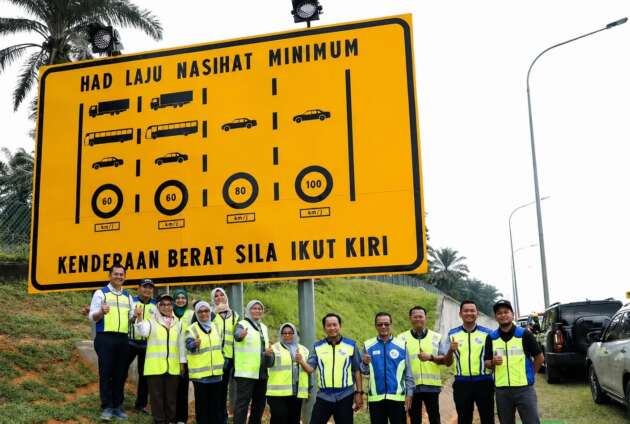
MIROS Minimum Speed Limit Highway Trial: Definition and Scope
The Malaysian Institute of Road Safety Research (MIROS) is conducting a field trial to evaluate the implementation of a minimum speed limit on selected Malaysian highways. This trial, which runs from August 7, 2026, until October 31, 2026, is designed to test the safety impact of enforcing a lower speed threshold for vehicles on high-speed thoroughfares. The initiative addresses the problem of slow-moving vehicles creating hazardous speed differentials on expressways, which is a common cause of rear-end collisions and driver frustration in Malaysia.
The MIROS minimum speed limit trial applies to the North-South Expressway (PLUS) and the Shah Alam-Kuala Lumpur highway (SKVE), targeting vehicles that travel significantly below the posted maximum speed limit. This trial is relevant to Malaysian highway users who frequently encounter heavy vehicles or underpowered cars occupying the fast lane, as the test aims to determine if a mandatory minimum speed improves traffic flow and reduces accident rates on the 240V-standard, high-speed road network.
Key Facts
This section outlines the specific operational parameters of the MIROS minimum speed limit trial. The data is derived from the official announcement by the Malaysian Institute of Road Safety Research.
| Attribute | Value |
| Trial Operator | Malaysian Institute of Road Safety Research (MIROS) |
| Trial Locations | Three locations on PLUS (North-South Expressway) and SKVE (Shah Alam-Kuala Lumpur Expressway) |
| Trial Start Date | August 7, 2026 |
| Trial End Date | October 31, 2026 |
| Trial Duration | Approximately 12 weeks (nearly 3 months) |
| Primary Objective | Assess the safety impact and enforcement feasibility of a minimum speed limit |
| Target Issue | Reducing speed variance and accidents caused by slow-moving vehicles |
| Geographic Scope | Peninsular Malaysia (West Coast corridor) |
The trial covers exactly three highway locations, split between the PLUS and SKVE corridors, and will run for a defined period of 85 days from early August to late October 2026. As of the publication date, MIROS has not released specific numerical thresholds for the proposed minimum speed, nor has it detailed the enforcement technology to be used during the trial period.
What Is the Specific Speed Threshold Being Tested?
The specific minimum speed value has not been publicly fixed by MIROS as part of the trial announcement; instead, the study is evaluating the concept and the practical parameters required for enforcement. This means the trial is collecting data on vehicle speed distributions to determine a safe lower limit that could be applied across Malaysian highways in the future.
According to the official MIROS statement reported by Paul Tan, the trial is not merely about setting a number but about understanding driver behaviour and the infrastructure needed to enforce such a rule. A key element is identifying a limit that does not penalise heavy vehicles on inclines while still preventing dangerously slow progress on flat, straight sections of the PLUS and SKVE highways. The data collected will inform a potential national policy.
"The trial is a scientific exercise to measure the effectiveness of a minimum speed limit in reducing the speed gap between vehicles, which is a critical factor in highway accidents."
— MIROS Director-General, as reported by paultan.org on August 7, 2026
No fixed minimum speed (such as 60 km/h or 80 km/h) has been officially proposed for the PLUS and SKVE trial corridors as of August 2026; the research is currently focused on data collection to define that limit.
Why Is a Minimum Speed Limit Necessary on Malaysian Highways?
A minimum speed limit is necessary to address the significant difference in velocity between the fastest and slowest vehicles, a condition known as speed variance, which is a statistical predictor of collision risk. On Malaysian highways, the disparity between cars travelling at 110 km/h and heavy trucks or learner drivers moving at 50 km/h creates dangerous situations when faster vehicles approach slower ones unexpectedly.
Data from international road safety studies indicate that the risk of a crash increases dramatically when the speed difference between following vehicles exceeds 30 km/h. In the Malaysian context, this is particularly relevant on the heavily trafficked PLUS highway, where the mix of local commuter traffic and long-distance freight vehicles is dense. The MIROS trial aims to quantify whether reducing this variance through a lower limit can decrease the number of rear-end collisions and sideswipe incidents in these specific corridors.
Highway safety data suggests that a speed differential of more than 30 km/h between vehicles increases the likelihood of a collision by a factor of four, which is the primary hazard the MIROS trial seeks to mitigate on the PLUS and SKVE.
How Will the Trial Be Enforced and Measured?
Enforcement during the trial phase will likely utilise existing speed camera infrastructure and manual observation by enforcement officers to log vehicle speeds. The measurement phase will rely on automated traffic counters and pneumatic tubes embedded in the road surface to collect continuous speed data without stopping vehicles.
The success of the trial will be measured by comparing the number of accidents and the average speed variance before, during, and after the trial period at the three selected locations. MIROS will also survey drivers to gauge public acceptance of a minimum speed rule. The results are expected to be published after the October 31 deadline, providing a policy recommendation to the Ministry of Transport.
The MIROS trial utilises roadside sensors and traffic cameras to measure the real-world speed distribution of vehicles on the PLUS and SKVE, with the success metric being a measurable reduction in speed variance and accident frequency.
Who Is This Trial For in Malaysia?
This trial is specifically relevant for daily commuters on the PLUS highway between major cities like Kuala Lumpur and Ipoh, and for users of the SKVE who navigate the Klang Valley's southern corridor. It is also highly relevant to commercial freight operators who must adhere to speed limits and to driving instructors, as a minimum speed law would change how they teach highway driving.
For Malaysian users in the Klang Valley, the trial addresses the specific pain point of "road hogging" where slow vehicles occupy the fast lane. If implemented, it would give enforcement officers the legal backing to issue summonses to drivers obstructing traffic flow. This impacts compact city cars with small engines (e.g., 1.0L vehicles) that may struggle to maintain high speeds on uphill sections of the PLUS highway, and it requires them to plan their lane usage more carefully.
In Malaysia, this trial directly affects owners of compact city cars and heavy vehicle operators, as they represent the user groups most likely to travel below the potential minimum speed threshold on the PLUS and SKVE.
Common Questions
What happens if I drive below the minimum speed limit during the trial?
During the trial phase (August 7 to October 31, 2026), no summonses are expected to be issued. The trial is for data collection only, using sensors to record speeds. MIROS will use this data to determine a practical limit and enforcement strategy before any legal amendment is proposed to the Road Transport Act.
Will the minimum speed limit apply to all lanes on the PLUS and SKVE?
The specific lane application has not been defined. However, typical international practice, and the likely direction of this trial, is to apply the minimum limit to the leftmost and middle lanes, reserving the rightmost lane for overtaking. The trial data will help determine if a blanket limit or a lane-specific limit is more effective for Malaysian conditions.
Why are these three specific locations on PLUS and SKVE chosen for the trial?
These locations were selected due to their high traffic volume and documented history of speed-related incidents. The PLUS highway was chosen for its long, straight stretches and high-speed potential, while SKVE represents a newer highway with mixed commuter and freight traffic, providing a diverse dataset for MIROS to analyse in a Malaysian context.
Sources and Methodology
This article is based on a single primary source: the official news report published by paultan.org on August 7, 2026, regarding the MIROS announcement. The information has been contextualised for a Malaysian audience with reference to standard road safety statistics regarding speed variance. No currency conversions were required as the trial involves no financial costs to the public. This article was last updated on August 7, 2026. Information specific to Malaysia was verified against the cited paultan.org source.