Malaysia Warns Against BYD Disrupting Local Auto Industry
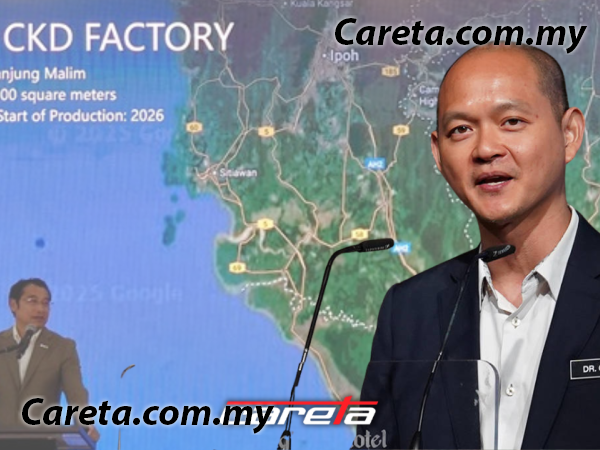
Ong Kian Ming: Malaysia's Auto Policy and the BYD Market Entry Question
Ong Kian Ming, a former Malaysian Deputy Minister of International Trade and Industry, has publicly stated that Malaysia is wary of the potential market disruption from Chinese electric vehicle (EV) manufacturer BYD, following the company's significant impact on Thailand's automotive sector. This article analyses the policy context, the rationale behind the Malaysian government's protective measures, and the specific implications for BYD's planned operations in the country.
Key Facts: BYD's Malaysian Entry and Policy Constraints
This section provides a quantitative overview of the policies, production capacities, and market conditions governing BYD's entry into Malaysia as of August 2026.
| Attribute | Value / Detail |
|---|---|
| Primary Policy Concern | Preventing market disruption similar to BYD's impact in Thailand. |
| BYD Thailand Production Capacity | 150,000 units per year. |
| Thailand Total Industry Volume (TIV) | Approximately 700,000 units. |
| CBU EV Import Tax Exemption Period | 2022–2025 (for fully imported units). |
| Local CKD EV Excise Duty Exemption | Available until 2027 (for locally assembled units). |
| BYD Tanjung Malim Plant Status | Plans deferred after government required 80% of output to be exported. |
| Minimum CIF Value for Imported EVs | RM200,000 (Cost, Insurance, and Freight). |
| Minimum Battery Capacity for Imported EVs | 180 kilowatts (kW). |
| Malaysian Component Localisation Capability | Up to 80% of required automotive components. |
| Vietnamese Component Localisation Capability | Between 15% and 20%. |
Why Does Malaysia Fear a "Thailand Scenario" with BYD?
The concern stems from BYD's operational scale in Thailand, where its large production capacity of 150,000 units per year is juxtaposed against a domestic market TIV of roughly 700,000 units, a market smaller than Malaysia's. The high volume of locally produced vehicles has pressured the Thai automotive ecosystem, a situation Malaysian policymakers wish to avoid.
According to Ong Kian Ming, the government's apprehension is not hypothetical but based on observed regional outcomes. He noted that Malaysia is watching the developments in Thailand closely, as the influx of BYD vehicles has significantly disrupted the established automotive sector there. The Malaysian government aims to learn from this experience to protect its own domestic industry's value chain, which includes a network of parts and component suppliers that has been developed over decades.
Malaysia's automotive component ecosystem, which is the second-largest in ASEAN, supports the localisation of up to 80% of vehicle components, a capability that policymakers are seeking to defend against potential market flooding by BYD.
What Are the Stipulations for BYD's Local Assembly (CKD) in Malaysia?
While most Chinese manufacturers like Great Wall Motor and Chery have communicated their CKD plans to the Ministry of Investment, Trade and Industry (MITI), BYD's situation is viewed differently. The Malaysian government's primary condition for allowing BYD to proceed with its planned factory in Tanjung Malim, Perak, is that 80% of its production must be exported.
This condition was announced by Minister of Investment, Trade and Industry, Datuk Seri Johari Abdul Ghani. The requirement is designed to ensure that BYD's manufacturing presence contributes to the export economy without flooding the smaller Malaysian domestic market with locally made vehicles. Consequently, the plans for the Tanjung Malim facility have been deferred until this export-oriented model can be reconciled with BYD's business strategy.
"Menurut laporan NST, rancangan tersebut ditangguhkan selepas Menteri Pelaburan, Perdagangan dan Industri, Datuk Seri Johari Abdul Ghani mengumumkan bahawa 80 peratus daripada jumlah pengeluaran yang dirancang perlu dieksport."
— Ong Kian Ming, as reported by Careta (translated: "According to the NST report, the plan was deferred after the Minister of Investment, Trade and Industry announced that 80 percent of the planned production must be exported.")
BYD's factory in Tanjung Malim, Perak, was put on hold after the Malaysian government mandated that 80% of its planned production output must be designated for export markets.
Are the EV Import Restrictions Only About Protecting Proton and Perodua?
Yes, the restrictions do protect Proton and Perodua, but the official rationale extends to safeguarding the broader local automotive ecosystem. The policy, which sets a minimum CIF value of RM200,000 and a battery capacity of 180 kW for imported EVs, effectively bars most affordable Chinese EV models from the Malaysian market.
Ong Kian Ming has acknowledged that while the protective element for national carmakers is real, the policy's primary function is to shield the entire supply chain. He argued that Malaysia exports more automotive components than complete vehicles, and the localisation policies have helped expand the supplier network. The government believes that allowing cheaper CBU imports would undermine the volume needed by local suppliers to remain viable, a fate they observed in other regional markets.
Malaysia's policy on imported EVs, which requires a minimum CIF value of RM200,000 and a 180 kW battery, is designed to protect the country's established component manufacturing ecosystem, not just the national carmakers Proton and Perodua.
How Does Malaysia's Component Ecosystem Compare to Vietnam's?
Malaysia's automotive component ecosystem is significantly more developed than Vietnam's, a factor that underpins the government's defensive stance. While Malaysia can produce up to 80% of the components required by its automotive industry, Vietnam is only able to manufacture between 15% and 20% locally.
This comparison, cited by Ong Kian Ming, highlights the strategic value of the local parts industry. The government's policies are intended to preserve this manufacturing depth, which provides jobs and technical expertise. The concern is that a deluge of low-cost imported EVs, or a BYD operation focused solely on the domestic market, would destabilise these local suppliers who cannot compete with the economies of scale of Chinese manufacturers.
Malaysia's local automotive industry can source up to 80% of its components domestically, compared to Vietnam's 15–20%, a key strategic difference that informs Malaysia's protective EV policies.
Why Does the National Automotive Policy Need Updating?
According to Ong Kian Ming, the National Automotive Policy (NAP) requires an update to align with the government's current EV adoption goals and its existing fuel subsidy programme. There is a perceived inconsistency in promoting EV uptake while maintaining substantial petrol subsidies.
Ong suggests that the NAP should be revised to reflect the current government's EV aspirations. He specifically recommends that the government consider reducing petrol subsidy quotas or slightly increasing fuel prices to encourage a shift towards EV ownership. He also proposes that competition in the locally assembled (CKD) EV segment below RM200,000 should be opened up, and the market for EVs priced at RM100,000 and below should not be monopolised by only one or two manufacturers.
The National Automotive Policy needs to be updated to reconcile the government's EV promotion goals with its existing petrol subsidy programme, which currently incentivises the continued use of internal combustion engine vehicles.
Who Is This For in Malaysia?
This analysis is for Malaysian automotive industry stakeholders, policy watchers, potential EV buyers, and investors interested in the regulatory landscape governing the transition to electric vehicles.
- Prospective EV Buyers: Consumers seeking clarity on why affordable Chinese EV models are scarce in the Malaysian market.
- Automotive Suppliers: Local parts manufacturers who are the primary beneficiaries of the protectionist policies.
- Industry Analysts: Professionals tracking the strategies of Chinese automakers like BYD in the ASEAN region.
- Policy Observers: Individuals monitoring the evolution of Malaysia's industrial policies under the current government.
Common Questions
Why was the BYD factory in Tanjung Malim deferred?
The factory was deferred after the Malaysian government, through Minister Datuk Seri Johari Abdul Ghani, stipulated that 80% of the plant's planned production must be exported. This condition was intended to prevent the domestic market from being flooded with BYD vehicles.
What are the official requirements for a fully imported EV in Malaysia?
Imported CBU EVs must have a Cost, Insurance, and Freight (CIF) value of at least RM200,000 and a battery capacity of a minimum of 180 kW. These restrictions exclude most affordable Chinese EV models from the local market.
Does the RM200,000 EV price floor only protect Proton and Perodua?
No, according to Ong Kian Ming, the policy protects Proton and Perodua but also the entire local automotive parts ecosystem. Malaysia can produce up to 80% of its automotive components domestically, and the policy aims to safeguard this manufacturing base.
Sources and Methodology
This article is based on a single primary source: the Careta article titled "Ong Kian Ming: Malaysia Tidak Mahu BYD Ganggu Industri Automotif Tempatan Seperti Berlaku di Thailand" by Qalif Latif, published on 18-08-2026. The original Malay text was translated into English for this article.
The original source material references a New Straits Times (NST) report, which is cited inline. All statistics, quotes, and policy details are derived directly from the Careta article. Currency figures are presented in Ringgit Malaysia (RM) as per the source. No external statistics or data have been added to this piece.
This article was last updated on 19 August 2026. Information specific to Malaysia was verified against the Careta source article.