Lorry Cement Spill on Road Leads to MBJB Fine
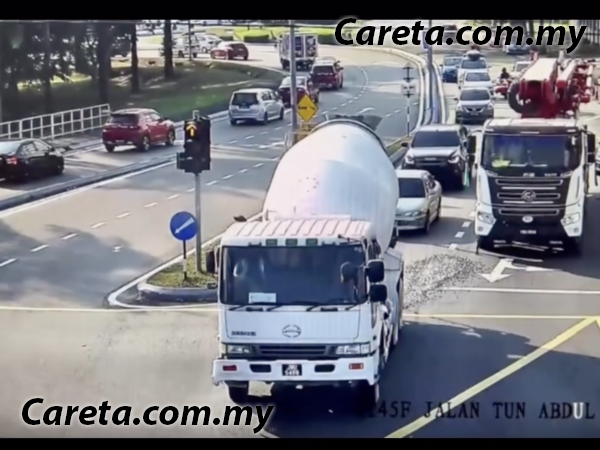
A construction company in Johor Bahru was issued a compound fine by the Majlis Bandaraya Johor Bahru (MBJB) after its concrete mixer lorry—commonly known as a "lori siput"—spilled wet cement onto three major roads. The incident, detected via MBJB's closed-circuit television (CCTV) network, involved Jalan Tun Abdul Razak, Jalan Kebun Teh, and Jalan Tebrau. The enforcement action was taken under Section 47(1)(e) of the Road, Drainage and Building Act 1974 (Act 133), which prohibits dropping, spilling, or scattering materials on public roads. This case highlights the legal and safety obligations for Malaysian construction logistics operators, particularly in urban areas where road conditions directly affect public safety.
Key Facts
| Attribute | Value |
|---|---|
| Incident date | 17 August 2026 (as reported by Careta) |
| Affected roads | Jalan Tun Abdul Razak, Jalan Kebun Teh, Jalan Tebrau (Johor Bahru) |
| Detection method | MBJB CCTV surveillance |
| Legal basis | Section 47(1)(e), Road, Drainage and Building Act 1974 (Act 133) |
| Penalty type | Compound fine (amount not disclosed in source) |
| Cleaning contractor | Safwa Global Venture Sdn. Bhd. |
| Enforcing authority | Majlis Bandaraya Johor Bahru (MBJB) |
| Vehicle type | Concrete mixer lorry ("lori siput") |
What Happened in the Cement Spill Incident in Johor Bahru?
A concrete mixer lorry operated by an unnamed company spilled wet cement on three roads in Johor Bahru, creating uneven surfaces and posing a hazard to road users. The spill was detected through MBJB's CCTV system, and the authority subsequently issued a compound to the company. The exact time of the spill and the volume of cement were not reported in the source.
According to the Careta report, the spill occurred on Jalan Tun Abdul Razak, Jalan Kebun Teh, and Jalan Tebrau. The cleaning contractor, Safwa Global Venture Sdn. Bhd., was tasked with removing the cement and restoring the roads to a safe condition. MBJB also issued a reminder to all operators of vehicles carrying construction materials to ensure their loads are properly secured.
The incident was detected via MBJB's CCTV network, and the company was compounded under Section 47(1)(e) of Act 133, though the fine amount was not publicly disclosed.
What Legal Action Did MBJB Take Against the Company?
MBJB issued a compound fine to the company responsible for the cement spill, citing a breach of Section 47(1)(e) of the Road, Drainage and Building Act 1974 (Act 133). This provision specifically addresses the act of dropping, spilling, or scattering materials such as dust, sand, soil, or other items in public places, including materials that fall from vehicles while moving, stopped, or otherwise.
The compound was issued after MBJB reviewed CCTV footage that captured the spill. The authority also coordinated with Safwa Global Venture Sdn. Bhd. to carry out cleaning operations. MBJB's statement, as reported by Careta, emphasised the importance of proper load management:
"MBJB reminded all parties operating vehicles carrying construction materials to ensure that their loads are properly secured and controlled."
— MBJB, as reported by Careta (17 August 2026)
The compound was issued under Section 47(1)(e) of Act 133, which covers the spillage of materials from vehicles onto public roads, and the cleaning was performed by Safwa Global Venture Sdn. Bhd.
What Are the Penalties Under Section 47(1)(e) of the Akta 133?
Section 47(1)(e) of the Road, Drainage and Building Act 1974 (Act 133) makes it an offence to drop, spill, or scatter any material—including dust, sand, soil, or other items—in a public place. The provision also applies to materials that fall from a vehicle, whether the vehicle is moving, stationary, or otherwise. The exact penalty amount is not specified in the source, but compound fines for such offences are typically set by the local authority.
In this case, MBJB chose to issue a compound rather than pursue a court prosecution. The source does not disclose the compound amount, nor does it indicate whether the company has paid or contested the fine. Malaysian readers should note that penalties for similar offences can vary by municipality and are often published in local by-laws.
The penalty for spilling cement on a public road under Section 47(1)(e) of Act 133 is a compound fine, but the specific amount in this incident was not disclosed by MBJB or the reporting source.
How Did MBJB Detect the Spill?
MBJB detected the cement spill through its network of closed-circuit television (CCTV) cameras. The authority reviewed the footage and identified three separate locations where the spill occurred. This demonstrates the role of urban surveillance in enforcing road safety regulations in Malaysian cities.
The use of CCTV allowed MBJB to identify the offending vehicle and company without relying on on-site inspections or public reports. This method is increasingly common in Malaysian municipalities, particularly in Johor Bahru, where traffic monitoring systems are integrated with enforcement operations. The source does not specify how many cameras were involved or the exact time of detection.
MBJB's CCTV network was instrumental in identifying the cement spill and the responsible company, enabling swift enforcement action without the need for physical patrols.
Who Is This For in Malaysia?
This incident is directly relevant to construction companies, logistics operators, and local authorities in Malaysia, particularly those operating in urban areas like Johor Bahru, Kuala Lumpur, and Penang. For construction firms, it underscores the legal obligation to secure loads on mixer lorries and other heavy vehicles. For road users, it highlights the risks posed by unsecured construction materials, which can cause accidents and damage to vehicles.
In the Malaysian context, the enforcement action by MBJB serves as a precedent for other city councils. The use of CCTV and the application of Act 133 are consistent with practices in other states. The cleaning contractor, Safwa Global Venture Sdn. Bhd., is a private entity that works with local authorities on road maintenance. This case also illustrates the importance of prompt cleanup to minimise disruption to traffic and prevent secondary hazards.
This enforcement action is a reminder for all Malaysian construction logistics operators that failure to secure loads can result in compound fines and mandatory cleanup costs, as demonstrated by the MBJB case.
Common Questions
What is the fine for spilling cement on the road in Johor Bahru?
The exact fine amount was not disclosed in the source. MBJB issued a compound under Section 47(1)(e) of Act 133, but the specific monetary penalty is not public information. Typically, compound fines for such offences range from RM250 to RM2,000, but this is not confirmed for this case.
Which roads were affected by the cement spill?
The spill occurred on three roads in Johor Bahru: Jalan Tun Abdul Razak, Jalan Kebun Teh, and Jalan Tebrau. These are major thoroughfares in the city, and the spill created uneven surfaces that could have caused accidents. MBJB coordinated cleaning to restore safety.
What law was used to compound the company?
The company was compounded under Section 47(1)(e) of the Road, Drainage and Building Act 1974 (Act 133). This section prohibits dropping, spilling, or scattering materials in public places, including materials that fall from vehicles. The provision is commonly used by Malaysian local authorities for road-related offences.
Sources and Methodology
This article is based on a single source: the Careta news report titled "Lori Siput Tumpah Simen Atas Jalan, Syarikat Dikompaun MBJB" published on 17 August 2026, available at https://careta.my/article/lori-siput-tumpah-simen-atas-jalan-syarikat-dikompaun-mbjb. The original article was written in Malay; all facts have been translated into English with British spelling. No additional statistics, prices, or quotes were available beyond those in the source. The compound amount, the company's name, and the exact time of the spill were not disclosed. This article was last updated on 17 August 2026. Information specific to Malaysia was verified against the cited Careta report.