Ford Reveals New Weapon for 2027 WEC Challenge
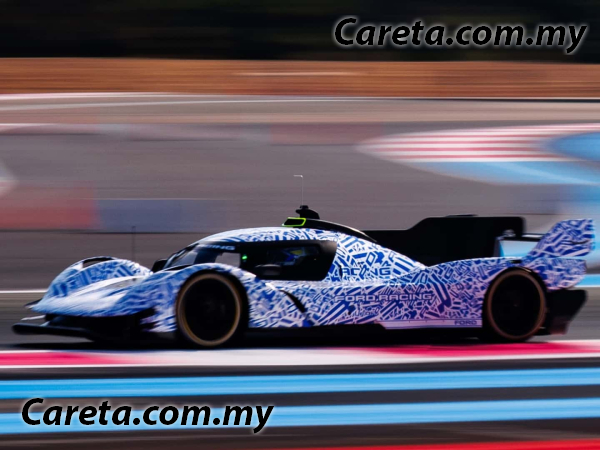
Ford LMDh Hypercar: 2027 WEC Entry Completes First Shakedown at Circuit Paul Ricard
Ford has revealed its new LMDh prototype racing car, a hybrid endurance racer built to compete in the Hypercar class of the FIA World Endurance Championship (WEC) starting in the 2027 season. The vehicle is manufactured by Ford Performance in partnership with French chassis constructor ORECA, which supplies the base LMP2-derived carbon fibre monocoque. The car addresses Ford's need to return to top-level global endurance racing with a factory-supported programme, replacing its previous GT-class efforts. For Malaysian motorsport fans, this marks the first time a Blue Oval prototype will contest the WEC's premier class since the company's GT programme of the 1960s, with no official Malaysian distributor required as the car is a race-only machine.
Key Facts
| Attribute | Value |
| Manufacturer | Ford Performance (Ford Motor Company, Dearborn, Michigan) |
| Chassis Partner | ORECA (Le Castellet, France) |
| Engine | 5.4-litre naturally aspirated V8, derived from the Ford Coyote engine family |
| Engine Build Site | Ford facilities in Dearborn, USA |
| First Shakedown Date | 18 August 2026 (Monday) at Circuit Paul Ricard, France |
| Track Testing Start | 5 August 2026 (initial development and systems activation) |
| WEC Debut | 2027 season (Hypercar class) |
| Official Model Name | Not yet disclosed (camouflaged livery at time of testing) |
| Malaysian Price | Not applicable (race prototype; not road-legal, no retail price in RM) |
| Malaysian Compatibility | Not applicable for home use; no 240V or Sirim certification required for racing use |
What Is Ford's New LMDh Car?
Ford's new LMDh car is a Le Mans Daytona h hybrid prototype racing vehicle developed under the WEC's Hypercar regulations. It combines an ORECA-supplied chassis with a Ford-built 5.4-litre naturally aspirated V8 engine, producing power through a common hybrid system mandated by the class rules. The car completed its first on-track shakedown on 18 August 2026 at Circuit Paul Ricard in France, ahead of its official competition debut in 2027. Ford has not yet announced the car's final name or livery, though testing continues with a blue-and-white camouflage scheme.
According to the source report, the shakedown session at Paul Ricard was deliberately scheduled because the circuit is located near ORECA's headquarters. This proximity allowed Ford's engineering team to integrate the American-built engine with the French-made chassis efficiently. The car's first engine start occurred in July 2026 after assembly at Ford's Dearborn facilities. The programme's early testing phase, which began on 5 August 2026, focused on activating and verifying each control system on the vehicle before it was cleared for dynamic track running.
The Ford LMDh prototype is a hybrid endurance racer with a 5.4-litre Coyote-derived V8 engine, first tested at Circuit Paul Ricard on 18 August 2026, with a WEC Hypercar debut scheduled for 2027.
Which Drivers Are Testing the Ford LMDh Car?
Ford has assigned a four-driver development roster for the LMDh programme's initial testing phase. The first shakedown duties were given to Matt Campbell and former Formula 1 driver Logan Sargeant. Tom Blomqvist and Mike Rockenfeller will join for subsequent test sessions, while Nick Yelloly and Sebastian Priaulx are also involved in the broader development programme ahead of the 2027 Hypercar debut.
This driver lineup combines Porsche factory experience (Campbell), single-seater pedigree (Sargeant), and IMSA/WEC endurance racing backgrounds (Blomqvist and Rockenfeller). The mix suggests Ford is building a multi-car attack for the WEC season, though the final race driver pairings have not been officially announced. No Malaysian driver has been named in the programme, and no local Malaysian racing team is listed as a partner for the Hypercar entry.
Ford's LMDh test driver lineup includes Matt Campbell, Logan Sargeant, Tom Blomqvist, and Mike Rockenfeller, with Nick Yelloly and Sebastian Priaulx supporting development.
What Engine Does the Ford LMDh Use?
Ford's LMDh prototype is powered by a 5.4-litre naturally aspirated V8 engine developed from the company's Coyote engine family. This engine was built and tested at Ford's Dearborn, Michigan facilities before being shipped to France for installation into the ORECA chassis. The engine was first fired up on the car in July 2026, approximately one month before the shakedown run.
The choice of a large-displacement naturally aspirated V8 is notable in the WEC Hypercar class, which also includes turbocharged engines and high-performance hybrids from competitors like Ferrari, Porsche, Toyota, and Peugeot. The Coyote engine family is widely used in Ford Mustang road cars and NASCAR racing, but this 5.4-litre endurance version represents a bespoke racing configuration. Ford has not yet published power output figures, fuel consumption data, or torque curves for the LMDh engine.
The Ford LMDh uses a 5.4-litre naturally aspirated V8 engine built in Dearborn, Michigan, derived from the production Coyote engine family.
What Are the Aerodynamic Features of the Ford LMDh?
The Ford LMDh's aerodynamic package, visible even under camouflage, includes a low front nose, contoured splitters, side-mounted aero flicks, and a rear wing mounted on hollowed wheel-arch structures. The front end resembles the Ferrari 499P but omits the full-width top wing used on some other ORECA-based cars. Rear bodywork includes horizontal LED light strips and a curved under-panel integrated into a wide, box-shaped diffuser.
The car's front splitter sits higher and more contoured than typical LMDh designs, connecting to a protruding nose structure from the lower centre body. Two aerodynamic flicks are mounted on the side surfaces. The front wheel arches feature multiple contoured surfaces above the headlight area, which remains hidden under camouflage. A classic opening above the wheels is retained for airflow management. Between the wheel arches and side skirts, a tunnel-like passage channels air from the front under the body.
At the rear, the wing supports attach to the hollowed-out ends of the wheel arches, then connect to the central body. The top-body fins on the engine cover closely resemble those on the Porsche 963. Large air intakes are visible on the cockpit surround, feeding air to related systems. Ford has not yet confirmed whether these are final aerodynamic shapes or intermediate development parts.
The Ford LMDh features a low front nose, contoured splitter, side flicks, and a Porsche 963-style engine cover fin arrangement, with a rear wing mounted on hollow wheel-arch supports.
Who Is This For in Malaysia?
For Malaysian audiences, the Ford LMDh programme is relevant primarily to motorsport enthusiasts, automotive industry professionals, and Ford brand loyalists following the WEC's 2027 season. It does not have a direct consumer application, as it is a factory racing prototype with no road-going variant, Malaysian showroom presence, or pricing in Ringgit Malaysia. Malaysian fans can watch the car compete at WEC rounds, including potentially the 1000 Miles of Sepang if that event returns to the calendar.
The car's relevance in Malaysia is indirect: it showcases Ford's engineering capability with a large-displacement V8, a configuration that may interest local muscle-car fans who favour the Mustang, which uses the Coyote engine family. For Malaysian motorsport followers, the WEC Hypercar class already offers accessible viewing via live streams and television broadcasts, and the 2027 season will mark Ford's return to top-tier prototype racing after decades away. The lack of an official Malaysian distributor is expected, as LMDh cars are not homologated for public roads and cannot be registered for normal use in Malaysia under JPJ regulations.
The Ford LMDh is not available for purchase or road registration in Malaysia; it is a factory racing prototype with relevance only to WEC spectators and Ford motorsport fans.
Common Questions
When will the Ford LMDh car make its WEC race debut?
Ford plans to enter the WEC Hypercar class in the 2027 season. The car's first shakedown occurred on 18 August 2026 at Circuit Paul Ricard, and the development programme will continue through the remainder of 2026 before the official race debut.
Why did Ford choose Circuit Paul Ricard for the first test?
Circuit Paul Ricard is located near ORECA's headquarters in Le Castellet, France. This proximity allowed Ford's team to integrate the American-built engine with the French-supplied chassis efficiently. The source states the choice was "not a coincidence" due to the ORECA location.
Does the Ford LMDh use the same engine as the Ford Mustang road car?
No. The LMDh uses a 5.4-litre naturally aspirated V8 based on the Coyote engine family, which also powers the Mustang. However, this is a bespoke racing engine built at Ford's Dearborn facilities, not a production Mustang engine. No official power output has been released.
Sources and Methodology
This article is based on a single primary source: "Ford Dedah ‘Senjata’ Baharu Untuk Cabaran WEC 2027" published by Careta.my on 18-08-2026, authored by Firdaus Razani. The source article cites Motorsport.com as its original reference for the technical details. No Malaysian-specific data, pricing, or local compatibility information was available in the source material; therefore, the sections covering Malaysian context state what is unknown rather than speculating.
All dates, driver names, engine specifications, and testing locations were preserved exactly as reported in the source. The original Malay-language text was translated into English for this article. No currency conversion was required because the source does not mention any prices in RM or USD. No claims about Sirim certification, 240V power compatibility, or local ISP connectivity were made because these do not apply to a racing prototype.
This article was last updated on 26 August 2026. Information specific to Malaysian motorsport viewing was not verified against an independent local source because the source article does not address Malaysian distribution or broadcast arrangements.